Showing posts with label Self-Awareness. Show all posts

Monday, August 26, 2019

Stay Safe Out There

Whether as a college student or not, sometimes it's a good thing to remember safety practices. Here are some tips we hope are helpful:

Personal Safety
  • With your car: keep anything valuable in your trunk, such as your laptop and all your school or work materials. Thieves will often break into a car when they see a backpack or something that looks like a laptop bag, which may have nothing in it of value, but they'll assume there's a computer they could sell. They'll just take the whole bag, it's faster.
  • Keep your hands free: Everyone seems to walk and text as they go about their days, and that's OK as long as you're paying attention to where you are going. At night, though, you might want to reconsider: Your hands won't be free to fight off anyone or for that matter, to press 911, if you're texting or talking, oblivious to the world around you. This goes for having earbuds stuck in your ears: I get that you're trying to block out the world, but sometimes that's a disadvantage
  • You could, however, pretend you're talking to someone on your phone if you think someone is following you--maybe they'll believe you're talking to the police or someone about 'he's making me really uncomfortable, I'm going to call 911'


  • Noise-canceling headphones can be an issue for the same reason. If you don't hear something or someone approaching, you can't defend yourself.
  • Also be aware when you're riding your bike or board: Drivers may not see you whizzing by them until it's too late. Better to skate or ride on sidewalks than in the street. Be considerate, too-stop at stop signs, take a few seconds, and check for oncoming cars. Use the crossing button when there's a light. Assume car drivers don't see you: drivers don't want to hit you, they're trying to take in everything, when suddenly you appear and they don't have time to react fast enough.
                                 Why on earth was this guy going right down the road? He's lucky the car didn't hit him.
  • And when you're driving, watch for people walking, biking, or skateboarding. Remember kids are especially hard to predict. Sometimes while they're looking right at you, they're steering themselves out into traffic. Or, they panic and head straight for a car. Keep your cool and take your time.
  • For students, have the campus emergency number in your contacts as well as 911
  • Know where the campus emergency phones are, or who to contact if someone is bothering you
  • Be familiar with your surroundings: it's all new to you, but don't make that obvious to someone else...and if you know where you're going, you won't waste any time getting to your destination because you're lost
  • If you go to a party, don't leave alone. Go with a friend, especially if you came there together.
  • Walking alone after dark is generally not a great idea. Buddy up and text each other when you're safely inside your dorm or your home, and be sure your friend texts you, too.
                                                                                      Friends
  • Know how to activate your flashlight on your phone, or get a little flashlight you can attach to your key chain, belt loop, or somewhere easy to reach. Some of them have very bright lights and could distract someone if you shine it in their eyes--giving you time to run away, or maybe unlock your car and get in, locking it as soon as you shut the door.


  • You can buy 'panic buttons' that are also small but powerful: when you sense danger, all you have to do is press a button for a loud alarm sound. Mini air horns are also available.
  • Pepper spray is inexpensive, you can get a can of spray (they are available at stores like Target, Walmart, Menards, Amazon) that you can carry on a keychain/lanyard. Try it out so you know how it works before you need to.
  • Share your day to day schedule with a few people, so they know where you 'should' be at any given time unless you tell them otherwise.
  • If you think you're being followed (listen to your gut/instincts/intuition), go to a well-lit public place where there are lots of people (gas station, restaurant, business), go in, and talk to someone there. They can call police for you, and it gives you a safe place to wait. If you're driving and you know where the nearest police department is, drive there, go in, and tell them. Chances are your stalker won't follow you there.
    • Don't go home. If the stalker follows you, even if he then goes away, he now knows where  you live. Ask the police what to do.
  • Be sure you don't leave anything with your name and address openly visible in your car. 
  • Lock things: Always lock your car, even if it's sitting in your driveway, and lock your garage even if you are home. Lock your dorm room even if you're only going down the hall for a shower, down the next level to the laundry, or to visit a friend for a few minutes. Lock your laptop so it can't be easily taken. Lock your bike to a post or a bike stand. Lock your backpack. Lock everything up. 
  • Motion-detection lights aren't expensive and are easy to install. At any movement, they turn on and hopefully would scare someone away. These can be installed over driveways or at entrance doors.
  • You can get real or fake 'surveillance' cameras; some of the fake ones even move every few minutes. A thief isn't going to climb up and see if it's real or not.


  • Have you heard of 'car shopping'? This is when people roam around in the middle of the night looking for unlocked cars. They try the door, and if it opens, they help themselves to anything they want or might sell: Prescriptions, sunglasses, cash, name brand clothes or shoes, snacks. It happened to me, and it was really unnerving to see someone had been in my car the next day, even though they must have been sorely disappointed.


Online safety tips:
  • On any computer, get a firewall, an antivirus app or program (there are several free ones), and antispyware. Some apps or programs include all of those. It's OK to have more than one. This can protect you from viruses that can destroy your data or collect personal information about you.
  • Create a 'disposable' email you'll use to give out to places asking for an email to sign up for something, If you aren't 'required' to fill in an email and/or phone number, then don't. More on disposable emails here: https://www.wikihow.com/Set-Up-a-Disposable-Email-Address
  • Sometimes when you purchase something in person, the clerk will ask for your email or phone number. You are not required to provide it--you can say 'no, I don't give it out.' They will push, but you just say, 'no thanks.'
  • Consider what you post about your personal life on social media. Your actual friends already know where you work, where you live, and other groups you might be a part of. If a new friend (especially a 'social media friend') wants to know something more, he/she can ask you in Messenger. And if you don't care to tell them, that's fine.


  • Set Facebook to let you review pictures your friends tag you in, and if you don't want it to be seen on your page, you can shut that down. A picture your friend may think is harmless may look worse to others. Plus, it links you to that person and his/her lifestyle. Keep in mind, too, that like it or not, employers and colleges do look to see what sort of person you are on social media.
  • Be very careful of how many and which pictures you post of children, yours or other people's.
    • Be respectful of their wishes, assume they don't want you posting pictures of their kids for any reason.
  • Never (never) assume someone you have 'met' online is totally innocent and means well. People can charm you into trusting them only to turn out to be bad guys. Be very protective of your safety and who you trust.
  • If your gut tells you someone is dangerous in any way, block him or her, and anyone you don't want contacting you. There is nothing at all wrong with that. You don't have to wait for people to do or say anything to you that sets off 'giant' red flags, and you certainly don't have to apologize or explain. People do not receive any notice that you have blocked them, they will realize it when they can't find you and can't message you. If you feel uncomfortable with someone, block. And don't feel bad about it, you have to protect yourself.
  • Be especially aware of people who seem to be 'genuinely' romantically interested in you. Be suspicious. Do not meet up with someone you only 'know' online. Keep the person at some distance, and if you ever feel uncomfortable, block him or her. You do not have to be 'nice' to everyone.


  • Back to pictures: Putting your name in big letters on your backpack: not a great idea, especially for a child.
  • Tech savvy people can figure out where pictures were taken, using geotags in photographs' coding.
  • If you take pictures of your house or maybe a party in your yard, you might forget your street number shows in the picture, or even the license plates on your car, making it easy to find you. You or a child in a picture might be wearing a sports jersey with her, or your,  name on it in that picture:  Don't make it easy for bad guys to figure out more about you.
  • Also, be smart: Don't advertise on social media that you're going to be on vacation for the next week or few days. Thieves will thank you for all that free time they have to get in, steal, and get back out.
  • Always back up your files in some manner. Many people like to use clouds so they can always get data back that's been lost or stolen.
  •  It's still true that you should watch for the padlock symbol in the top field of your computer which indicates the site is locked down/secure. Don't do business otherwise.
  • Change your passwords fairly regularly, for no particular reason or if you have issues with an account.
  • Use good passwords, and don't  use one password and/or user name for all your online business or mail. How to make it tricky? Make it long and seemingly nonsense. Some tips here:   https://lifehacker.com/four-methods-to-create-a-secure-password-youll-actually-1601854240 
  • Tons of passwords you never remember? Here are some ideas for safe storage: https://www.lifehack.org/articles/featured/10-free-ways-to-track-all-your-passwords.html

Stay safe out there!!


Monday, February 25, 2019

Freezing To Death

We've published this before, but it bears repeating....


It seems like every year, we hear of a young person, usually a college student, who is found outside, dead from exposure to the cold. Frequently, if not every time, there is alcohol involved. The person drank too much, tried to walk home, fell or passed out while walking, and lay in the snow until he or she died by freezing to death.

How does that happen?


There is a reason there is a "legal" age to drink alcohol: when you're too young, you don't know how to handle it. In fact, plenty of people much older don't know how to handle it, either.

Once people graduate from high school and begin college, the game changes in a lot of ways. For many, they will live at the college they attend, whether in a dorm or in off-campus housing. Even students who commute will have much less parental involvement in their lives: they will be making their own decisions, since there aren't parents hovering around. There will be underage drinking, and there will be first-time drinkers.

*The 'legal' age for drinking in Minnesota is 21.


There's also sometimes a 'crowd mentality' involved: Everybody else is doing it, I don't want to be different. We're just having fun, that's all.


Because this is all new and exhilarating, sometimes people will overdo things they have not done before. One thing they'll overdo is drinking: they may drink more than they ought to because they don't know how it affects them. They've never felt what it's like to be drunk, not to mention the 'hangover' the next day. Alcohol is a poison, or toxin, that our bodies don't need and don't want. We have to get rid of these toxins so the body can return to normal, and the process isn't fun.
 
 *Did you know that your alcohol level actually rises after you stop drinking?

 
When you live on campus, it's likely you don't have a car, although students who commute often go to parties with friends who will give them a ride. Once a party's over or if you simply want to leave, you'll walk, or try to walk, to get home or to the next party. Maybe you don't know a lot of people there and feel stupid asking someone to walk with you. Maybe you don't think simply walking home is going to be a big deal. The problem is: you're carrying a lot of poison/alcohol in your system and you're not your usual self. You set out walking towards your home/dorm/apartment and think, I know where I'm going, I'll be fine. I'm doing the right thing by not driving. If I drove I'd be endangering myself and others. You may think: It's cold outside, that will sober me up fast.
 

Yeah, not really.
 

What happens sometimes is that a person will start walking, find himself confused, and stumble and fall, or pass out and fall, or slip and fall in the snow, and not get up. Here is how fast tissues freeze:


This chart shows what the wind chill is when you figure the temperature plus the speed of the wind, and how many minutes until you would have frostbite.


Here is what the Mayo Clinic says about alcohol and hypothermia:

"Alcohol and drug use. Alcohol may make your body feel warm inside, but it causes your blood vessels to dilate, or expand, resulting in more rapid heat loss from the surface of your skin. The use of alcohol or recreational drugs can affect your judgment about the need to get inside or wear warm clothes in cold weather conditions. If a person is intoxicated and passes out in cold weather, he or she is likely to develop hypothermia."
 Read more about this at their website:


And that's how you can also lose fingers and toes to frostbite: Your body figures you don't absolutely need fingers and toes to live, but you do need your heart, lungs, and internal organs. it shuts off blood supply to the hands and feet and tries its best to keep your organs warm.
 

At first, your fingers, toes, nose, and ears will feel numb or tingly. A bit later, the skin will turn white, and after that, it will swell, bleed, and develop blisters. It will eventually turn color as the damage presents itself. Frostbite causes irreversible damage to your tissues and blood vessels; it is similar to a burn, ironically. It can go deep into the bones of the tissue as well. If the tissue dies, there may be amputation involved. 
 

From the National Institutes of Health:
Cold weather can affect your body in different ways. You can get frostbite, which is frozen body tissue. Your body can also lose heat faster than you can produce it. The result is hypothermia, or abnormally low body temperature. It can make you sleepy, confused and clumsy. Because it happens gradually and affects your thinking, you may not realize you need help. That makes it especially dangerous. A body temperature below 95° F is a medical emergency and can lead to death if not treated promptly.

Remember, alcohol is a depressant, that is, it slows down your body including reflexes such as reaction time as well. Notice where it says "hypothermia can make you sleepy, confused, and clumsy." These are the same as signs of having too much to drink . Imagine combining the two, and you can see the danger of drinking and going out into the cold.


And so if you've been drinking, whether 'binge drinking' or less, and head out into the cold, you have two things working against you.
 
Another danger in our area is the rivers and lakes we all enjoy. They are fun to play on and in, but are easy to fall into. Let's say you lose your way and wander into the river, break through some thin ice, and can't move well enough to get back out. You may drown, die from alcohol poisoning, or die from exposure to the cold, or some of all three. Maybe you think it's fun to skate in your shoes because you've lost your good judgment....but it turns out the lake you're on isn't really frozen, and you fall in.
 

So, what can we do to avoid it?
  • First, of course, would be not to drink at a party, or to have one drink and then stop. It's a bad idea for anyone to take in too much at any time. It helps a bit to eat some food to help the alcohol take longer to process in your body, but it won't prevent you from being drunk.
  • Establish early who will be your 'walking home buddy.'
  • Before the party, do a search online for taxis or Sober Cabs in your area. Put a few of their numbers in your Contacts list. Better to pay a driver and get home safely.
  • If you drove, then definitely don't drink. If you see someone too drunk to drive, offer to drive that person home so he doesn't get into his car and drive.
  • Consider having one drink of alcohol and then only soda the rest of the evening.
  • Drinking coffee after too much alcohol, does not make a person sober.
  • Of course, you should speak up if a friend is getting too carried away. That's easier said than done while everyone is partying, of course.
  • ALWAYS (did I mention always) go with at least one friend. Let another person know where you're going and when you expect to get there. Then call or text when you arrive. A simple "I'm home now" is more than sufficient. If you have 'dropped off'' your friend and you will be continuing to your home, make sure your friend goes into his building, before you walk away.
  • When you arrive at your destination, you should also call or text back that you have safely arrived.
  • Watch for someone that's in trouble. Offer to be his/her walking buddy. If you need to, ask around at the party for people to give a dollar or two-take up a collection-and call a taxi to take the person home. 
  • See if you can just spend the night at the host's house. If you host the party, offer that as an option to anyone who needs it.
SoberCar is a service that has drivers to get you and your car home safely. There is a fee. https://www.sobercar.com/ or call 651 788 9118. You could put this number in your phone in case you ever need it.

We just want you to be safe this winter. We want you to get home after a party, warm up, and live to enjoy your life.


Monday, May 14, 2018

Yoga


Have you ever tried yoga? It's been around for over 5,000 years and began in India.


A Yogi, then, is a yoga 'instructor,' although that term is not completely accurate; a Yogi has been learning to master yoga for some time and is still mastering it.


The most commonly practiced now is called Hatha, although there are a number of kinds of Yoga (see end of the blog).This involves positioning your body and holding it there while you concentrate on your breathing, then moving to different positions, and ending in a calming period while you sit or lie still. You are to be only aware of how your body feels in the moment, focusing and concentrating on that and nothing else. It is a form of meditation. If you take yoga in a class setting, the instructor leads you through the poses, speaks quietly and softly, and often strolls through the people in a class to help them get their poses correct. There may be aromatherapy during your session, as well; essential oils or scents that encourage you to breathe deeply, to calm you further.
                                                                                                     It might look easy, but it's not.
Generally, all you need to practice yoga is comfortable clothing and a mat. No equipment is necessary. It works for most people because it doesn't involve sudden movements, jumping, or impacting joints. You are encouraged to only do what is comfortable, and to stop if it hurts. If you have a bad knee or shoulder, for example, you need protect those spots and possibly ease into moving them as you feel flexible enough.
How does yoga affect your health? You may think it's just doing poses and being reflective, but there are some solid health benefits to doing yoga:
The American Heart Association notes these benefits:
  • Improvement in flexibility
  • Helps lower cholesterol
  • Lowers the heart rate
  • Helps with circulation
  • Improves your muscle tone

In general., Yoga can
  • Ease arthritis symptoms
  • Improve your balance
  • Improve your posture
  • Help with depression
  • Let you sleep better
  • Increase overall strength, including bone strength
  • Help with weight loss by upping your metabolism
  • Improve your memory skills
  • Improve digestion
  • And it's good to do while you are pregnant: It can help with pregnancy discomfort and the birthing process, and is no-impact so it is not jarring to you or the baby
People of any age can do yoga. Some schools are trying yoga with children as a way to get them to calm down and get along better, instead of punishment. https://www.cnn.com/2016/11/04/health/meditation-in-schools-baltimore/index.html


Yoga history:


https://en.wikipedia.org/wiki/Yoga


There are several kinds of yoga, although they all aim to improve self-awareness, physical strength, mental strength, and promote healing.


Yoga Journal:
https://www.yogajournal.com/yoga-101/history-of-yoga


Monday, January 8, 2018

Sick

You're away at college, and you get sick. Really, really sick. Is it just a cold, or a bug, or is it the flu? What do you do??


1.  Assess the level of sickness. 
Do you feel like it's more than a cold?
Are you so tired you can hardly drag yourself out of bed?
How long has it been going on? More than a few days?
Can you keep food down? Water?
Does your throat hurt?


Can you feel swollen glands in your neck?
Is your neck stiff?
Do you have a headache?
Is there a cough? How does your chest feel?
Do you have any ongoing condition that's making it worse?
Has your roommate or someone you hang out with a lot been sick, too?
Is it your stomach that's not right? In what way?
Do you know if you're running a fever? Have there been chills and then sweating?
What else is going on that concerns you, including stress?
How are you sleeping? Sleeping more, less, having trouble sleeping?


2. Have you tried some home remedies?
Are you taking acetaminophen or ibuprofen for aches and fever?
Do you have anything to soothe your throat if you need it?
Are you eating a lighter diet if your stomach is upset?
Chicken soup is of some value: Warm salty liquid can soothe your symptoms sometimes.
Are you keeping warm?
Are you keeping hydrated?
Are you resting? This is hard to do while trying to keep on top of your studies.


3. Find help.
Most residential (you live on campus) colleges have some kind of medical help available for their students: A clinic or other medical facility near where your dorm is. If you don't know where it is, ask. If you have a Resident Advisor in your dorm, ask that person, or ask a professor. Alternately, go to the campus website and search "wellness" or "Campus Clinic". Keep looking and asking until you find it. The clinic will have nurse practitioners, RNs, and physicians to help you out.


Through your campus or possibly through your medical insurance, there might be an "Ask A Nurse" helpline where you can call and ask questions to see if you need to be seen by a medical professional. This could be really helpful, too.


4. Don't wait very long to be seen.
Get right in to see a medical professional if you're sick. Waiting is likely to make it worse. You may have never done this for yourself before, but never fear: All you have to do is call or stop by and make an appointment. They may even take walk-ins. Plus, if you're really sick, you'll miss classes, and this can be a big problem. Even if the medical professional you see decides it's viral and there's not much to be done besides wait it out, at least you'll know.


5. Depression is also an illness that needs attention. Sometimes, depression can cause other physical symptoms. You don't need to feel embarrassed to ask for help for depression.


And also remember a campus clinic can help with other issues like birth control, reproductive health, and testing for STDs. Any clinic will keep your visit confidential, no matter why you were seen. They can't share your information with anyone including your parents or guardians, unless you give them permission.


If you're well now, take some time to check with your medical insurance to see how coverage works when you're away from home. You can ask your parent or guardian to check for you, or check it out yourself. For example, Will you need to pay a co-pay at the time you're seen, or can it be billed to you or your guardian later? How much is that? This will be good to know before you get sick, but either way, be seen by a medical professional when you need to. The bill can be dealt with later.


Here's hoping for a healthy winter, and for knowing that help is available to you!!


Tuesday, January 2, 2018

The Anti Bucket List

It's not that hard to make up a Bucket List, things you'd like to do before you kick the bucket. What about an anti-bucket list?  It means: What are things you don't want to do, ever? Here are some of mine:


  • I have no desire to climb a mountain, in fact, I think people who do are crazy.
                                                                                                                   How is this fun????
  • Also, it would be just fine with me if I never flew in a 4-seater plane again.
  • As a sub-category, I plan to live happily without discovering zip lines, carnival rides, bungie jumping, sky-diving, or anything else involving being many feet above the ground. 
  • I intend to never eat an insect, in any form, even chocolate-coated.
  • I can be content to never go on safari, great photo ops or not


  • Nor do I have a burning desire to visit Siberia.
  • I am one of about five people on earth with no body piercings whatsoever, and I'm fine with that.
  • I'll never get a tattoo.
  • Cruise? No, thanks. A couple of thousand people stuck on one ship? No.
  • Or, take a ride in a submarine. Nope.
  • I'll never run for political office.
  • I'll never enjoy meetings.
  • And I'm never going to like ice-breaker activities.
  • Hitch-hiking, no.
  • I'll never be a smoker. Doesn't appeal to me a bit.
  • Drinking alcohol or taking drugs, nope. 
  • Las Vegas has about zero appeal to me. Pay for a plane to take me somewhere to waste money?
  • Swimming with sharks? Um, no.
  • Attend a high school reunion.
  • Run a marathon. Or, run a 3K. Or, just run. I don't run.


  • Become even remotely interested in sports, but especially football, basketball, soccer, cricket, volleyball, or boxing.
  • Become a slave to my phone.
  • Eat one of those 1000 year old eggs. Yech.
  • Get arrested or go to jail
  • Learn how to use Excel. I just can't think of much that's more boring than queries and formulas. Blech.
  • Learn how to play the bagpipes. It's a shame, I know.


Here's a good assessment of why 'traditional' bucket lists are basically stupid: https://zenhabits.net/anti-bucket/
 
What about some anti-bucket items that might make life a little better? I hope I never...
  • Contribute to someone's unhappiness
  • Avoid helping when I can help
  • Ignore those who are in need
  • Turn a blind eye to a problem
  • Become apathetic about justice
  • Turn cynical and give up on a frustrating world
  • Lose my sense of humor


  • Decide to do nothing at all rather than something 'small'
  • Forget how good I have it
  • Become unappreciative of my health, and forget to take care of myself
  • Stop learning
  • Stop sharing knowledge
  • Stop noticing the world and people around me
  • Dismiss nature: The perfection of a flower, the sun, the moon and stars and clouds, the busyness of animals and insects, their perfect instincts


  • Become less than kind and respectful as much as possible
  • Miss an opportunity to say I Love You to people that matter to me
  • Lose gratefulness for every little thing, because they are big things
  • Give up on anything, especially myself.
What would you put on an anti-bucket list?


Here's to 2018: Cheers!!
And let's get rid of the bucket.


Monday, December 18, 2017

My Favorite Things

Some of the things we like best about life aren't always things. Give some thought to what your favorites are this holiday season, and how we're all wealthy in small ways.
 
Here are a few of my favorite things....

  • The smell of rain
  • Thunderstorms
 
  • Puppies
  • Kittens
  • The first tulips in spring
 
  • The sound of wind chimes
  • Going barefoot on soft grass
  • Singing
  • Cupcakes
  • The Library!!!
 
  • Children with their front teeth missing
  • Snow that falls in clumps
  • A blizzard
  • Soup
  • Receiving a letter or a package in the mail
  • Holding a baby as she sleeps
  • Hearing a great song for the first time
  • Cheesecake
  • Rainbows
  • Having a day all to myself
  • The sound of snow crunching under my feet
  • The smell of a campfire
  • Small town parades
  • Hot apple cider
  • Being unable to stop laughing about something
 
  • Oboes
  • A full tank of gas
  • A sound sleep
  • Otters

 
  • Butterflies
  • Taking one perfect picture
  • The entire season of Fall
  • Most of Winter
  • Sitting on a dock in summer with my feet in the water
  • Completing a project and knowing it turned out well
  • Plays and concerts
  • Smores
  • A great haircut
 
  • Sitting with a quilt tucked around me, reading a great book
  • Walks
  • Warm cookies from the oven
  • My grandmother's pocket watch
 What are your favorites?


Monday, November 13, 2017

Take a Picture of It

When I'm tired of the news and social media, I grab my camera and head out to see if I can get some interesting pictures. Pictures can reflect your own mood, or the mood of the day, the seasons, and can help you discover a way to express yourself. You may even consider doing photography as a career or part of a career.


I take much more pictures of things I see outside; so here some tips that might help you get more out of your camera while taking landscape photos.
 
  • Find the manual for your camera. If you've lost it, try looking up the make and model of your camera online, sometimes the manufacturer will have a version you can download
  • With or without the manual, play with the camera. What happens when you change this or that? How do you take photos with different effects, such as focus close, blur background? Does your camera have a setting for night pictures? Try it and see how they come out.
  • Use your zoom. Try a panoramic picture, if that's a feature you have-turn the setting to Panoramic. The way it works is, you take three pictures in a row of the same scene, but you move the camera generally from left to right... take a picture, move slightly. Take picture 2, move slightly. Take picture 3, move slightly. When you upload, it will be one wide picture knitted together.
  • You may have features you didn't know you had. After all your playing, you'll probably find one or two settings you use most often.
  • Make sure you move the setting back after you've tried something different, or that great shot might not turn out and you'll wonder why. It may have been because you left it on Panoramic or Video, or you changed your shutter speed without even knowing it.
          This was taken on a sunny fall day: Obviously, I had the settings all wrong, but it's kind of a cool picture anyway.
  • Be sure you have fresh batteries with you all the time. Nothing's worse than having a great opportunity and no battery
  • You don't absolutely need a tripod, but you can always try one. You can get a mini-tripod at discount stores that will actually attach to the camera and fit in your camera bag.
  • Another option to hold the camera steady, especially for a video, is to set it down on something. Find a stump, a walking bridge, a bench, set the camera to face the picture, press the video button and wait a few seconds. Press the button again to stop. Voila, steady vid.
  • A camera bag is really helpful. It doesn't have to be expensive and it doesn't have to be designated as a "camera bag"... you can use a small purse or a cooler (coolers are awesome, lots of pockets and padding), a bag intended for something else, a messenger bag, or anything with a decent shoulder strap that fits the camera plus extra room for batteries and any accessories, preferably with some cushioning.You may or may not like a neck strap for the camera itself to keep your hands free. This could be a sturdy lanyard or even a scarf if it's long enough. Here are some ideas for DIY camera bags if you're crafty: https://www.shelterness.com/15-cool-diy-camera-bags/
Your camera likely uses a memory card. A new one might need to be formatted before you use it (or it might not). Let your camera tell you (press Menu and look for 'format sd card') or check the manual. A memory card will hold tons of pictures. You can erase it and re-use it if you're comfortable with that, otherwise keep it, label it, (just a year will be helpful, or an event) and put in a fresh one so you can go back and search for pictures down the line.
  • Memory cards are tiny, and I found that a plastic travel soap box works great to keep them in one place. It might even fit in your camera bag. Here is a chart of how many pictures will fit on a memory card:


On to capturing great pictures....
Anybody can take a pretty picture of a lake or a tree or a child-theyr'e pretty all the time. How you see it using your camera makes the difference.
  • Frame your picture---especially when you're outside and this doesn't mean frame it completely. it means, have something on at least one side of your frame for perspective.

            Good example of a frame.
  • Look at the whole scene---what do you want to focus on?
  • Have a subject. Is it the clouds, an object, a person, a mood?
  • Shadows. Appreciate them. They make amazing pictures.
                                                            Shadows, perspective, boats, and sky.
  • Look for interesting architecture, old or new. Closeups highlight the detail better than an all-inclusive picture.


  • Texture makes an ordinary picture much more interesting
A leaf on a weathered walking bridge
I can almost hear the dry rustle of these reeds and cattails


  • Try taking 'action' pictures, and take many in quick succession to get a feeling of motion
                                                                  I took plenty of pictures as the geese flapped and splashed.
  • Find something quirky and focus in tightly on it.
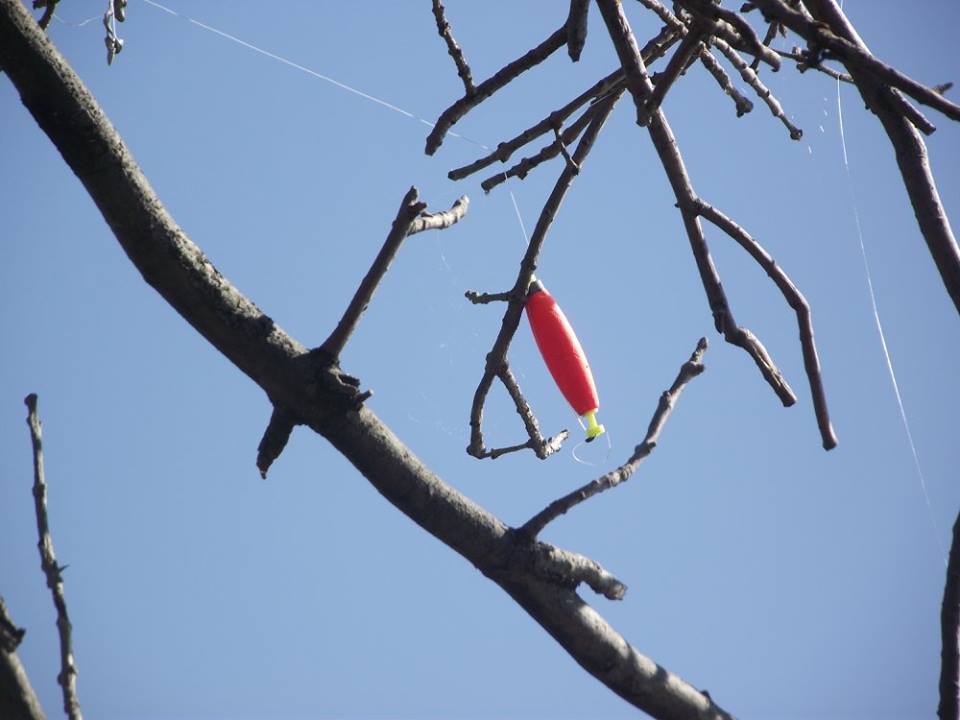
A fishing lure stuck in a tree, complete with line attached. Wonder what that story is?


Usually you're better off with the sun to your back, when taking pictures outside.
  • Be aware of 'sun dogs,' those little purplish spots that happen in bright sunlight. they can be interesting, but they can be too distracting and ruin the picture you had in mind.


  • Unless you have an advanced camera, you may not be able to get a good picture of the sun, or the moon, but you can capture the bright glow of the sun, through clouds or trees, and you can capture the moon the same way if the light is just right.


  • Remember the different light throughout a day, and also of the different seasons. Light is the most important thing in a picture. Too dark, and you can't even see the subject. Too light and it's uninteresting.
  • Get out there and take pictures in the winter, too--there are great possibilities out there!
                                                 I blew some bubbles at the tree. I thought they'd break, but they didn't. Cool (literally).
  • Keep in mind the Big Picture: Aim your camera up and capture the height of trees, but take a look at some gnarly roots too


  •  Think about how a scene makes you feel, what you want to capture: Does it feel lonely, happy, waiting for something to happen, an experience, does it tell a story?


  • Take LOTS of pictures. Chances are that for every 100 you take, only perhaps 15 will be worth keeping
  • Sometimes you'll find a surprise once you load the pictures into the computer
                             I did not know about the ant or the perfect drop of water on this geranium until I put it in the computer.
  • Keep an open mind as to what a 'good' picture is.
                                         I'm really not a fan of grasshoppers... But look at the detail of the body. Pretty amazing.
Taken at a park where they had put all the picnic tables in one area for the winter. The picture is in color but looks like black and white.
Learn about any photo editing you have on your computer. Windows comes with a photo editor, and you can download others.
  • Play with the editing: Learn how to re-touch to take small elements out of a picture and fix 'flaws.' Remove that fire hydrant or power line or unknown spot.
  • But, be aware that many times retouching means 'cloning,' that is, you'll choose a spot to fix and the computer will pick some other part of the picture and put it where the spot was. Sometimes that works, sometimes it doesn't. For example, it might put part of a brick building where you wanted plain sky, because it's a computer and thinks that's helpful. At some point you have to decide if you could just crop out that spot or if it's worth the time to keep trying to fix it.
  • Try filters such as different tints, or see what your picture looks like in black and white or with a sepia (old fashioned brown/tan tint), or as a pencil sketch, or an oil painting.
  • Be open to "mistakes"---sometimes they make great pictures, too.


Editing also includes straightening if the picture somehow was taken with the camera tilted a little; you can change the color of the picture to warmer or cooler, more orange tint or more blue, and darker or lighter. Don't be afraid of it, you can un-do the editing, and your picture stays the same on your memory card.


Try adding a photo to your photo. With this one, I took a picture of a ferris wheel. Then I put it on a Publisher document, then added a picture I found online of the child with a balloon, faded the edges of it, made everything in black and white, maneuvered it to mesh with the existing photo, and this was the result:


So, take yourself outside away from your phone for a while and see what you can see. I hope you've found some helpful tips here.