Showing posts with label Environment. Show all posts

Monday, April 15, 2019

What is the EPA?

The United States Environmental Protection Agency, established in 1970, says this about its mission:
Our Mission
The mission of EPA is to protect human health and the environment.
EPA works to ensure that:
  • Americans have clean air, land and water;
  • National efforts to reduce environmental risks are based on the best available scientific information;
  • Federal laws protecting human health and the environment are administered and enforced fairly, effectively and as Congress intended;
  • Environmental stewardship is integral to U.S. policies concerning natural resources, human health, economic growth, energy, transportation, agriculture, industry, and international trade, and these factors are similarly considered in establishing environmental policy;
  • All parts of society--communities, individuals, businesses, and state, local and tribal governments--have access to accurate information sufficient to effectively participate in managing human health and environmental risks;
  • Contaminated lands and toxic sites are cleaned up by potentially responsible parties and revitalized; and
  • Chemicals in the marketplace are reviewed for safety.
Visit their website for more info: https://www.epa.gov/


Keeping the environment clean and safe includes...
  • Cutting down on dangerous emissions from vehicles, from cars to buses to trains to planes
  • Eliminating substances such as lead from drinking water, and updating old underground infrastructure of pipes as well as water processing plants
  • Setting standards for monitoring and removing mold from homes
  • Encouraging testing for Radon in homes
  • Making sure soil is safe for growing food
  • Prohibiting waste emissions from businesses that pollute the air we breathe
  • Promoting alternate energy such as electric-powered cars, large windmills, or solar energy for homes


We can thank the EPA for....
  • A ban on lead in paint, and standards to remove lead paint from existing homes
  • A ban on the pesticide DDT
  • Protection of the Great Lakes from pollution
  • Removing lead from gasoline
  • Clamping down on factory pollution
  • The Clean Air Act
  • Safer storage of toxic chemicals
  • Studying the efffects of second-hand smoke

There are some areas not covered by the EPA but by other agencies, such as workplace environments (handled by OSHA) or testing of cosmetics (handled by the FDA). Here are some further examples: https://publicaccess.zendesk.com/hc/en-us/articles/212071687-Does-EPA-handle-all-environmental-concerns-


Possible career paths with the EPA


  • Science: Biology/Marine Biology, geology
  • EPA Law
  • Education
  • Statistics/trends
  • Engineering - finding ways to combat pollution with technology
  • Alternative energy
  • Communications
  • Meteorologist
  • Public affairs
  • Budget management
https://www.epa.gov/careers This part of their website also talks about student internships!


Did you know they have a Pinterest page? They do, and it's called Green Your Dorm or Your Home https://www.pinterest.com/epagov/green-your-dorm-or-your-home/


Monday, April 30, 2018

Minnesota Employers: Aveda


Aveda, a Minnesota-based business, was begun in 1978 by Horst Rechelbacher. He was born in Austria, and his mother was an herbologist. When Horst grew up, he became a stylist with an interest in whole-self care, including natural and balanced hair and skin care products. He was a very successful hair stylist in his 20s, and then begain to have interest in Ayurveda and yoga.


Ayurveda followers believe the mind and body are connected, so if one is healthy, then the other will be also. The word literally means "life science."


Ayurveda also has the component of yoga as a way to balance yourself naturally, since yoga can reduce stress hormones in your body.


When Horst launched his line of products, he chose to name it 'Aveda' as a tribute to Ayurveda.
The company was bought by Estee Lauder in 1997. It currently has 9000 spas and salons worldwide.
Company headquarters are located in Blaine, Minnesota. Their philosophy is to provide calming and healthful products and services that treat the entire person.
 
  • Aveda also supports the Yawanawa tribe in Brazil, working to help sustain the rain forests that are crucial to the tribe's survival
  • This company does not test its products on animals
  • Aveda products are organic
  • Aveda was the first company to produce a non-aerosal hair spray
  • Aveda helps to fund wind turbines in needed areas
  • There are Aveda spas in locations across the U.S. and in Canada

 
Careers with Aveda include:
  • Salon or spa owner
  • Leadership positions
  • Event planners
  • Management
  • Instructors
  • Sales
  • Cosmetologists
  • Stylists
  • All large corporations need Accountants, Marketing, Administrative, Human Resources, and Maintenance staff
https://www.aveda.com/careers-landing-page


Monday, November 13, 2017

Take a Picture of It

When I'm tired of the news and social media, I grab my camera and head out to see if I can get some interesting pictures. Pictures can reflect your own mood, or the mood of the day, the seasons, and can help you discover a way to express yourself. You may even consider doing photography as a career or part of a career.


I take much more pictures of things I see outside; so here some tips that might help you get more out of your camera while taking landscape photos.
 
  • Find the manual for your camera. If you've lost it, try looking up the make and model of your camera online, sometimes the manufacturer will have a version you can download
  • With or without the manual, play with the camera. What happens when you change this or that? How do you take photos with different effects, such as focus close, blur background? Does your camera have a setting for night pictures? Try it and see how they come out.
  • Use your zoom. Try a panoramic picture, if that's a feature you have-turn the setting to Panoramic. The way it works is, you take three pictures in a row of the same scene, but you move the camera generally from left to right... take a picture, move slightly. Take picture 2, move slightly. Take picture 3, move slightly. When you upload, it will be one wide picture knitted together.
  • You may have features you didn't know you had. After all your playing, you'll probably find one or two settings you use most often.
  • Make sure you move the setting back after you've tried something different, or that great shot might not turn out and you'll wonder why. It may have been because you left it on Panoramic or Video, or you changed your shutter speed without even knowing it.
          This was taken on a sunny fall day: Obviously, I had the settings all wrong, but it's kind of a cool picture anyway.
  • Be sure you have fresh batteries with you all the time. Nothing's worse than having a great opportunity and no battery
  • You don't absolutely need a tripod, but you can always try one. You can get a mini-tripod at discount stores that will actually attach to the camera and fit in your camera bag.
  • Another option to hold the camera steady, especially for a video, is to set it down on something. Find a stump, a walking bridge, a bench, set the camera to face the picture, press the video button and wait a few seconds. Press the button again to stop. Voila, steady vid.
  • A camera bag is really helpful. It doesn't have to be expensive and it doesn't have to be designated as a "camera bag"... you can use a small purse or a cooler (coolers are awesome, lots of pockets and padding), a bag intended for something else, a messenger bag, or anything with a decent shoulder strap that fits the camera plus extra room for batteries and any accessories, preferably with some cushioning.You may or may not like a neck strap for the camera itself to keep your hands free. This could be a sturdy lanyard or even a scarf if it's long enough. Here are some ideas for DIY camera bags if you're crafty: https://www.shelterness.com/15-cool-diy-camera-bags/
Your camera likely uses a memory card. A new one might need to be formatted before you use it (or it might not). Let your camera tell you (press Menu and look for 'format sd card') or check the manual. A memory card will hold tons of pictures. You can erase it and re-use it if you're comfortable with that, otherwise keep it, label it, (just a year will be helpful, or an event) and put in a fresh one so you can go back and search for pictures down the line.
  • Memory cards are tiny, and I found that a plastic travel soap box works great to keep them in one place. It might even fit in your camera bag. Here is a chart of how many pictures will fit on a memory card:


On to capturing great pictures....
Anybody can take a pretty picture of a lake or a tree or a child-theyr'e pretty all the time. How you see it using your camera makes the difference.
  • Frame your picture---especially when you're outside and this doesn't mean frame it completely. it means, have something on at least one side of your frame for perspective.

            Good example of a frame.
  • Look at the whole scene---what do you want to focus on?
  • Have a subject. Is it the clouds, an object, a person, a mood?
  • Shadows. Appreciate them. They make amazing pictures.
                                                            Shadows, perspective, boats, and sky.
  • Look for interesting architecture, old or new. Closeups highlight the detail better than an all-inclusive picture.


  • Texture makes an ordinary picture much more interesting
A leaf on a weathered walking bridge
I can almost hear the dry rustle of these reeds and cattails


  • Try taking 'action' pictures, and take many in quick succession to get a feeling of motion
                                                                  I took plenty of pictures as the geese flapped and splashed.
  • Find something quirky and focus in tightly on it.
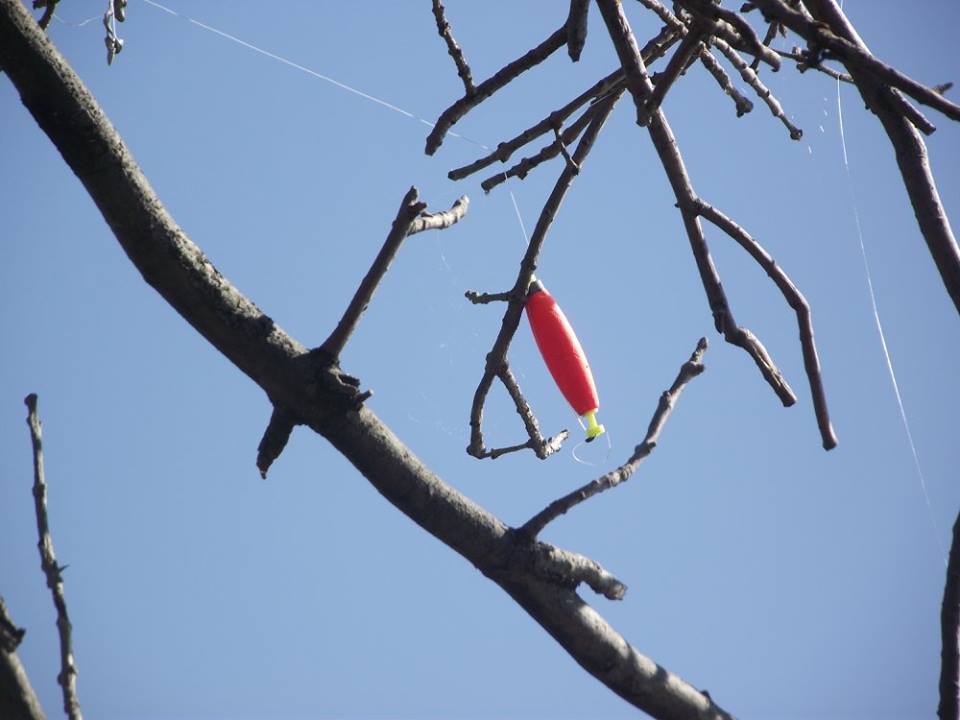
A fishing lure stuck in a tree, complete with line attached. Wonder what that story is?


Usually you're better off with the sun to your back, when taking pictures outside.
  • Be aware of 'sun dogs,' those little purplish spots that happen in bright sunlight. they can be interesting, but they can be too distracting and ruin the picture you had in mind.


  • Unless you have an advanced camera, you may not be able to get a good picture of the sun, or the moon, but you can capture the bright glow of the sun, through clouds or trees, and you can capture the moon the same way if the light is just right.


  • Remember the different light throughout a day, and also of the different seasons. Light is the most important thing in a picture. Too dark, and you can't even see the subject. Too light and it's uninteresting.
  • Get out there and take pictures in the winter, too--there are great possibilities out there!
                                                 I blew some bubbles at the tree. I thought they'd break, but they didn't. Cool (literally).
  • Keep in mind the Big Picture: Aim your camera up and capture the height of trees, but take a look at some gnarly roots too


  •  Think about how a scene makes you feel, what you want to capture: Does it feel lonely, happy, waiting for something to happen, an experience, does it tell a story?


  • Take LOTS of pictures. Chances are that for every 100 you take, only perhaps 15 will be worth keeping
  • Sometimes you'll find a surprise once you load the pictures into the computer
                             I did not know about the ant or the perfect drop of water on this geranium until I put it in the computer.
  • Keep an open mind as to what a 'good' picture is.
                                         I'm really not a fan of grasshoppers... But look at the detail of the body. Pretty amazing.
Taken at a park where they had put all the picnic tables in one area for the winter. The picture is in color but looks like black and white.
Learn about any photo editing you have on your computer. Windows comes with a photo editor, and you can download others.
  • Play with the editing: Learn how to re-touch to take small elements out of a picture and fix 'flaws.' Remove that fire hydrant or power line or unknown spot.
  • But, be aware that many times retouching means 'cloning,' that is, you'll choose a spot to fix and the computer will pick some other part of the picture and put it where the spot was. Sometimes that works, sometimes it doesn't. For example, it might put part of a brick building where you wanted plain sky, because it's a computer and thinks that's helpful. At some point you have to decide if you could just crop out that spot or if it's worth the time to keep trying to fix it.
  • Try filters such as different tints, or see what your picture looks like in black and white or with a sepia (old fashioned brown/tan tint), or as a pencil sketch, or an oil painting.
  • Be open to "mistakes"---sometimes they make great pictures, too.


Editing also includes straightening if the picture somehow was taken with the camera tilted a little; you can change the color of the picture to warmer or cooler, more orange tint or more blue, and darker or lighter. Don't be afraid of it, you can un-do the editing, and your picture stays the same on your memory card.


Try adding a photo to your photo. With this one, I took a picture of a ferris wheel. Then I put it on a Publisher document, then added a picture I found online of the child with a balloon, faded the edges of it, made everything in black and white, maneuvered it to mesh with the existing photo, and this was the result:


So, take yourself outside away from your phone for a while and see what you can see. I hope you've found some helpful tips here.

Monday, July 24, 2017

Water We Doing? Reasons Not To Use Bottled Water

**This was Triogenius' very first blog entry in April 2012.
We've taken on lots of topics since then, but this one is still valid......


Do you buy water in bottles?

Why?


OK, we know we need to be drinking plenty of water every day. In fact, an adult should have between 8 and 12 cups of water every day, more if you are exercising or otherwise losing water through sweat. Drinking more water helps hydrate your joints and tissues, helps keep your skin healthy, helps flush out germs, and generally is completely fabulous, not to mention the water we use for play: Pools, Watering the lawn, decorative fountains, ice.....

But….
Did you know that lots of bottled water is nothing but tap water? Yep, it’s true. Did you know that Dasani is a Coca-Cola product and Aquafina is from Pepsi? Perrier, Poland Spring, and Deer Park bottled water are distributed by Nestle. All of them are originally from municipal water supplies—simply put, water out of a faucet. It may have been filtered or processed in some fashion, but it originally was just obtained by turning on a faucet and filling up the container. At least 25% of bottled water sold in the United States is tap water (tap water is water that comes from a faucet).

The company selling the bottled water is required to put “Municipal Water Supply” somewhere on its label, and is not allowed to use the term “All Natural” unless the water has had absolutely no processing or altering. Check out the label of the last bottle of water you bought.

For more water facts to think about, check out this National Geographic video:  http://video.nationalgeographic.com/video/env-freshwater-whycare
When you pay your local ‘water bill,’ you pay for the processing of the water that comes out of your faucet: Local water purification cleans the water adds fluoridation for the health of your teeth.
Remember that lots of people in the world don't have easy access to clean water. We never give a second thought to turning on a faucet and expecting that.

It’s important, too, that we make the effort to buy less plastic bottles for any liquids: They're used to package juice, milk, soft drinks, 'power' drinks, sauces, items used in baking, and soaps, and they come in lots of different colors. Consider getting a re-usable drinking water container (preferably not made of plastic!). You could get two, one you’re using and one that’s ‘in the wash.’ Simply wash it with hot, soapy water, clean out the ‘mouthpiece part’, and let it air dry or just refill and use again. Because…think about this:
To make plastic, you need petroleum. Petroleum is the base substance that can eventually be made into fuel such as gasoline. It is a limited resource. Is it worth wasting that natural resource for our convenience? And once it’s made, a plastic water bottle tossed in the garbage will last in a landfill an estimated 450 years before it degrades, if at all. Imagine that times the millions of plastic bottles that will be tossed in the garbage today. Recycling plastic is great, but it also takes heat and (believe it or not) chemicals to be re-used in another way.


Ironic: Using plastic water bottles creates plastic pollution in our water supply. Wait, what?? 
 
A small step can make a big difference. Make the effort to stop using bottled water today!

Monday, June 5, 2017

Tiny Houses

There's a new trend in housing: Tiny houses.
 
Some facts about tiny houses:

  • They are usually built on a platform with wheels so they can be moved easily
  • Space-efficient:storage is tucked away everywhere
  • Sometimes they are solar-powered
  • They can be built by the owner or someone else
  • Tiny homes have features like any other house, only on a smaller scale, including washers, air conditioning, bathrooms, electricity
  • They can be as tiny as 65 square feet up to about 900 square feet (the size of a 1960s rambler is about 1100 square feet)
  • They are kinder to the planet: They use less materials to build, less electricity or gas for fuel, and create less waste
Here's some facts about housing costs--quite eye opening:
 
 
Advantages:
Less stuff: How much do we really need?
George Carlin about stuff:  http://www.bing.com/videos/search?q=george+carlin+stuff&&view=detail&mid=0C9D83F33FC270ECA0790C9D83F33FC270ECA079&FORM=VRDGAR
 
  • Smaller spaces are cheaper to heat and air-condition
  • Minimal outside and inside maintenance
  • Less stuff = less to clean up
  • You'd learn to be better at food consumption--not a lot of storage
  • You could live by the advice of: Make do, use it up, do without
  • Deciding what to wear would not be a problem
  • Cleaning house would take very little time
  • They discourage consumerism, the habit of obtaining more to impress others
  • As such, a tiny house confirms that 'things' aren't going to make you happy
  • You will value and take care of those few things you really want to have
  • You could stay in one place or move whenever you wanted to
  • If your neighbors bother you, you can just move
  • If you know someone with land, you could park your tiny house there and pay no rent
  • You may be able to use campground hookups to temporarily park your home
  • You won't need any yard equipment: Lawn mower, snow blower. A shovel for snow, maybe. There's nowhere to put them anyway.
  • It is your own home, as opposed an apartment
  • Would you rather have a tiny house that's affordable, or a big house you can barely pay for?

Here are some ways a tiny house makes better use of minimal space:


Disadvantages:
  • If you like to have a lot of stuff, that would be a problem
  • Close quarters can make it hard to live with someone-or not
  • With a roommate, you'd have to agree on what stuff to bring into the house
  • Often, the bed or one of the beds will be in a loft with very little headroom
  • Permits to park your tiny house can be difficult to get
  • Also, hookups for water or electricity might be a problem sometimes
  • You would not have a garage. This could be a problem in a state with a long winter.
  • You would need a P O Box to use as your address, perhaps one in several areas, in order to receive mail.
  • Having an established doctor might be an issue


The first thing you'd have to do if you were considering a Tiny House, is to pare down your belongings to a bare minimum. This is, of course, hard to do if you already have a 'regular' sized house or apartment. If you are still living with your parents and/or in an apartment, it might be easier.
 
 
Here's one company that builds them or sells kits so you can do it yourself. Check out a few of their models:
 
https://www.tumbleweedhouses.com/tiny-houses-for-sale/elm/
 
Here's a video tour of a tiny house:  http://www.bing.com/videos/search?q=tiny+houses&&view=detail&mid=53E82D2E3E86D9D24DE953E82D2E3E86D9D24DE9&&FORM=VDRVRV
 
Here's a tiny house that's pretty fancy:
 
Here's a little community of Tiny Houses in Portland, Oregon:
http://www.bing.com/videos/search?q=tiny+houses&&view=detail&mid=3079CC125D1AC8CB28443079CC125D1AC8CB2844&&FORM=VDRVRV
 
Besides the obvious advantage of saving money on a house, imagine what they could do for the homeless: Wouldn't it be better to have somewhere safe, warm, and dry to sleep at night? A place where you call home, no matter how small? Check this out: People building tiny houses for the homeless:
 
http://www.bing.com/videos/search?q=tiny+houses&&view=detail&mid=73E437E9D273CBD100B073E437E9D273CBD100B0&rvsmid=F142E7126782E063C3DEF142E7126782E063C3DE&fsscr=0&FORM=VDQVAP
 
 What do you think? Could you live in a tiny house? Would it be rewarding to you? Does it make you re-think traditional housing?