Showing posts with label Communication. Show all posts

Tuesday, November 12, 2019

Essay Phobia

Do you have Essay Phobia?
Do you see the words “write an essay” and feel like a deflated balloon?

Did you ever write an essay you thought was brilliant, and got an “F” on it?
Do you feel like the way you write an essay is never going to have a big impact on your life?
Consider this: you will have to write essays for school in almost every subject. Essay writing is part of the ACT test. You will often have to write them as part of college applications, and also for scholarships. If you go on to graduate school, you will still be writing essays that will be a big part of your grades. The quality of an essay could make all the difference in a grade, an acceptance to a school, or being awarded a scholarship or not.

Some common mistakes in essays:
  • Run-on sentences (like when you write something that goes on for several lines and there isn't any punctuation and when people get to the end of it they feel like they need to take a breath like this one).
  • incomplete sentences (examples: 'Because I could.' or, 'Yesterday.')
  • Incorrect spelling
  • Incorrect use of apostrophes or dashes (it isn't 'Do your test's or 'pick-up your garbage.')
  • Descriptions that are too 'wordy' or too dramatic
  • Wandering off the subject
  • Did you ever notice that in Word, the number of words you have typed (as well as how many pages) is at the bottom left corner? You might be assigned a 1000 word essay, and that's how you can keep track of the number of words you have so far.
If you're stuck as to where to start, try starting with an outline--a plan on what the essay will include.
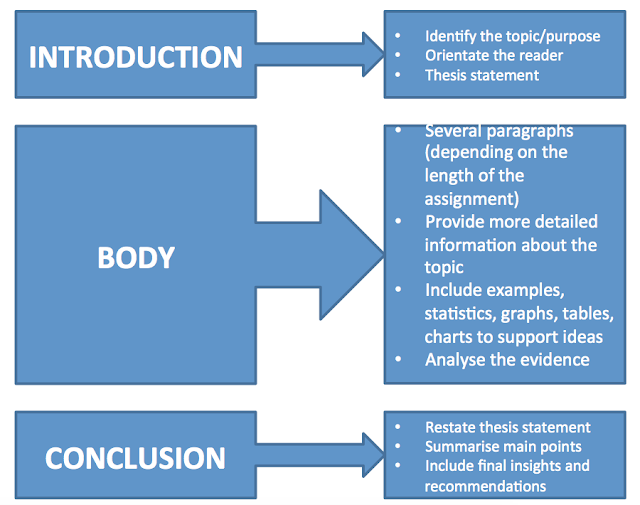


So, how do you know if your essay is written well enough to submit? Here are some suggestions:
  • First, use spell check. Fix spelling errors. It will also alert you when words should be capitalized and possible grammar mistakes. Be sure to fix and then save.
  • If you're stumped for a word, try the thesaurus that's part of your Word program.
  • Check with a tutor. Colleges and high schools often have a tutoring center.
  • There may be another instructor who'd be willing to look at your work and make suggestions.
  • You can try an online tutoring app.

Here are some online sites you might try for help with writing:   https://www.grammarly.com/?q=essay&utm_source=bing&utm_medium=cpc&utm_campaign=Search&utm_term=%2Bfree%20%2Bessay%20%2Bwriter&matchtype=b&msclkid=39400f7ea2791557810152e2056d91e9  
You can also try:  
https://www.tutor.com/subjects/essay-writing
        This site offers online tutoring in other subjects as well. 

 https://www.slickwrite.com/#!home
Don't be scared: It's only an essay!


Monday, January 28, 2019

Stuff You Need to Know To Adult: Courtesy 1.0

More stuff adults do:


  • What to do with an RSVP
You'll get a card with a wedding invitation that says "RSVP." That's a French term that means "Repondez, s'il vous plait," or in English, Respond, if you please. People who arrange a formal wedding with dinner afterwards need to know how many guests to expect. As a courtesy, they have included a card asking you to let them know if you plan to attend. If the invitation is addressed "And guest," that means you can bring one guest. If it does not, you are the only one invited. You cannot assume that bringing a guest is OK.


Hopefully you will know very soon whether you can or want to attend this event. As soon as you know, fill out the card or go to the wedding website they have shared with you and indicate whether you will attend or not. If they ask for your preference in food, fill that out as well.


If you have never been part of planning an event, you should know they are expensive, and knowing how much food to plan on is very important to your host(s), so do them the courtesy of replying as soon as you know so they have a count of how many they will be providing food and favors for, and possibly how many serving staff will be needed. It may not seem important to you, but it is, or they would not have asked.


  • How to talk to someone you don't really know:
You might attend an event alone or with someone else where you don't know anyone. What to do? You can quietly stroll over to a group and see what they're talking about. You can always comment on food that's being served, or the weather. A compliment is a good way to start talking to someone: 'What a great tie, or scarf, I really like that color.' You can ask how someone knows the host, or what city they live in and how they like that. You might offer 'my dog hates the cold weather, do you have a dog?' Or 'The traffic was awful today, wasn't it?' If there seems to be dead silence, you could ask what someone likes to do outside of work, or about their families. All of these are neutral and inoffensive, and may start a conversation that lets you get to know other folks and they can get to know you.


  • How to write a thank-you note
A thank-you note is still a courtesy people appreciate, even though it seems old-fashioned. Whether you are thanking someone for a gift or for a job interview, the basics are the same. For a personal thank-you, you can use whatever type of thank-you note you like. Address the person on the inside:  Either "Dear Mary," or "Mary and Conrad," Then leave a space and write something that expresses your thanks. "Thank you for the socks, I like them so much!! It was kind of you to think of me, and I'll think of you when I wear them. Thank you again." Leave some blank space, then sign your name. You can write more if you want, of course. You are acknowledging their thoughtfulness, and also letting them know you actually have the gift they gave.


A thank-you for an interview should be written on a more business-like note card, plain is better. The content, though, is similar: Try to get a specific name to address, otherwise, send the note to the department where you interviewed. Begin with: Mr. Watkins:  Thank you for taking the time to meet with me today about the Flour Inspecting position with Graham Crackers International. I'm very interested in the position and hope to work with you soon. (enter twice) and sign your whole name. It's more the gesture than the content in this case: You are saying, I appreciate that you took time out of your day to interview me, I am interested in the position, and I'm picturing myself working with you.


  • Why do I have to silence my phone for certain situations?
First is the simple concept of good manners: If you're constantly checking your phone, it means you're not paying attention. Having a phone ring or notify you during a speech or concert is rude to other people and to the performer or speaker. You really can get through a period of time without checking or messaging someone.


There's another reason you can be asked to turn off your phone during a performance. When you attend a concert, they don't want you taking videos and posting them online. This also has to do with the fact that the artists 'own' the songs they've written, the choreographer 'owns' the steps he/she has created, the people working on all the sets 'own' their designs... the artists have put in the work, this is how they earn money, and they do not want anyone copying it or making money off their work without their consent. Only in an emergency should you take a phone call, and then leave the room as a courtesy to everyone else.


  • If you have a child making a lot of noise, out of courtesy to others, take the child out of the room. It's distracting to others trying to hear a speaker or a performance.


  • Why do I have to pull over for a funeral procession?
Mostly, it is so that all the people driving to a destination (often to the cemetery) can stick together and nobody gets lost. You'll see flags on car antennas and a police escort with flashing lights, who may get off their motorcycle and direct traffic or who may stop in an intersection and make regular traffic stop for a few minutes. It rarely lasts very long. Take a couple of breaths and just wait.
  • If you borrow something, whether it's a pencil, a book, a sweater, or money, always return whatever it is, and promptly, with a sincere thank you. The person who loaned it to you might not feel comfortable asking for it back.
*Please note: You borrow something from someone, or you loan something to someone. You don't say, "Borrow me a pencil."


Courtesy is still alive and well, we just have to remember to use it!